 EN
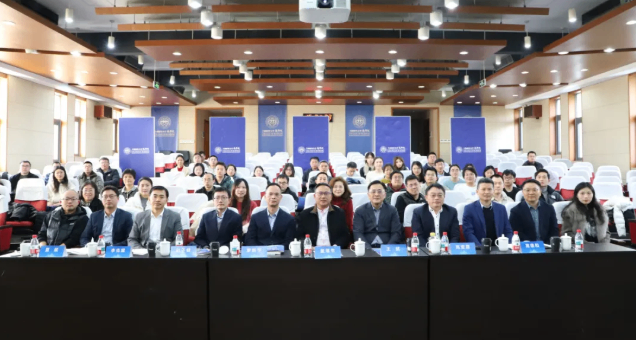
ENThe sub-forum of the “Strategizing the 15th Five-Year Plan” series — Seminar on Accelerating the Development of World-Class Enterprises and the Release of the China Top 500 Enterprise Competitiveness Index and Research Report was successfully held at Shanghai University of Finance and Economics (SUFE). The forum was hosted by Shanghai University of Finance and Economics (SUFE) and organized by the Chief Expert Team of Zhao Xiaolei from the Institute of Chinese-Style Modernization of SUFE, the Shanghai Institute of Development of SUFE and the China Enterprise Innovation and Development Research Base, and co-organized by the Shanghai Marketing Society and the College of Business of Shanghai University of Finance and Economics (COB, SUFE). Centered on the theme of “Accelerating the Development of World-Class Enterprises,” the forum featured in-depth discussions on topics including evaluation criteria for world-class enterprises, experiences and lessons from corporate globalization, and strategic directions for building world-class enterprises during the 15th Five-Year Plan period.
Xu Longbing, senior professor of SUFE and Vice Dean of the Institute of Chinese-Style Modernization of SUFE, extended a warm welcome to the leaders and guests attending the forum on behalf of SUFE and introduced the conference agenda.
Niu Zhiyong, Distinguished Research Fellow of the Institute of Chinese-Style Modernization of SUFE, presented the team’s research findings in a report titled “Building World-Class Enterprises: Insights from the Competitiveness of China’s Top 500 Enterprises’’ on behalf of the team. The report pointed out that Chinese large enterprises have shown a rapid development momentum in recent years. The scale of the Top 500 enterprises has expanded rapidly, and the quantitative gap with American enterprises has gradually narrowed. However, there are still obvious gaps with leading global enterprises in terms of profitability, innovation capability and internationalization level, with particular urgency in strengthening R&D intensity and innovation capabilities. The discussion further examined differences in industrial distribution, regional concentration, and ownership structures, and emphasized the importance of leveraging emerging technologies to drive corporate transformation and upgrading, foster innovation, and enhance global engagement. The report suggested optimizing the relationship between the government and the market, accelerating the upgrading and transformation of traditional industries, encouraging the development of innovative emerging industries, and strengthening the international competitiveness and brand development of enterprises.
Tong Jisheng, Member of the Standing Committee of the Shanghai Committee of the Chinese People's Political Consultative Conference (CPPCC), Convenor of the Economic Sector, Deputy Director of the Economic and Financial Committee of the Shanghai CPPCC, and President of the China Foreign Trade and Economic Cooperation Enterprise Association, conducted an in-depth discussion on the strategies for building China's world-class enterprises with the speech titled How to Build China's World-Class Enterprises During the 15th Five-Year Plan Period. Based on his rich international business experience in Shanghai Construction Group and Shanghai Textile Group, he emphasized the importance of international vision, core competitiveness and sustainable development. He pointed out that the key to successful global expansion lies in clear corporate positioning, effective strategic planning, enhanced international competitiveness, and sound risk management. His sharing provided practical guidance for enterprises seeking to grow in a complex global environment and outlined a clear path for Chinese companies aiming to rank among the world’s leading players.
Wang Bin, Secretary of the Party Committee and General Manager of Shanghai Xujiahui Mall Co., Ltd., and Standing Director of the Shanghai Marketing Society, shared Xujiahui Mall's in-depth thinking and strategic layout in industrial transformation with the speech titled Innovation as the Compass, Value as the Driver: The Layout and Thinking of Shanghai Xujiahui Mall Co., Ltd. During the 15th Five-Year Plan Period. He emphasized that enterprises should prioritize innovation and value orientation, placing “brand leadership, standards upgrading, and new technology application” at the core of their development agenda. In response to the transformation of the brick-and-mortar retail sector, he proposed innovative approaches such as introducing flagship stores, first stores, and revitalized legacy stores, while achieving brand differentiation through culture, creativity, and competitive pricing. He also addressed the challenges faced by the traditional retail industry, including “interwoven competition” and “squeezing competition” strategies. He suggested enhancing efficiency and reducing costs through refined management and digital transformation. Finally, he stressed the long-term development strategy based on innovative technologies and comprehensive digitalization, aiming to maximize enterprise value.
Luo Xinyu, Dean of the Shanghai State-owned Capital Operation Research Institute and Chairman of Shanghai State-owned Capital Training Center Co., Ltd., delivered a keynote speech from the perspective of “Transforming Toward New-Quality Productive Forces as Industrial Organizers.” He focused on critical issues in economic development, including reform of state-owned assets and enterprises (SOEs), transformation and upgrading, and the construction of a modern industrial system. He pointed out that state-owned assets and state-owned enterprises are facing three major transformation challenges: the shift from market-driven to the parallel development of functions and market, the transition from scale and speed to high-quality development, and the upgrade from production and operation entities to industrial organizers. The innovation of state-owned assets supervision mechanisms, such as the establishment of state-owned capital investment companies, has strengthened their role in technological innovation and industrial control. Practical cases demonstrate that by supporting emerging industries, promoting industrial chain upgrading, and implementing intelligent management systems, state-owned capital has effectively improved management efficiency. These efforts reflect SOEs’ commitment to adapting to market changes and advancing high-quality economic development in the new era.
Gao Baolin, Chairman of Shanghai Zhonghao Knitting Co., Ltd. and Shanghai Northeast Asia New Textile Technology Co., Ltd., shared his experience of overseas expansion in countries such as Ethiopia, Myanmar, and Japan with the speech titled “What Has Changed and What Remains Unchanged in Chinese Enterprises Going Global in the New Era.” He focused on the different performance of Chinese enterprises in overseas investment, especially comparing the overseas expansion strategies and effects of private enterprises and state-owned enterprises. Private enterprises face more obstacles in overseas development and have relatively few successful cases, while state-owned enterprises also encounter challenges, their stronger capital backing allows them to sustain investment and implement self-corrective measures. He also emphasized the impact of external factors such as the China-US trade war and exchange rate fluctuations on enterprises' overseas investment, as well as the importance of enterprise efficiency and profitability in overcoming these challenges. Finally, he called for attention to enterprise efficiency and profitability to promote sustainable development.
Zhao Zijian, Chief Analyst of the Policy and Industrial Research Institute of Guotai Haitong Securities, delivered a presentation on “Enhancing the Competitiveness of State-Owned Enterprises and Shanghai’s Practices in State-Owned Capital Reform.” He reviewed the development history of the Guotai Haitong Industrial Research Institute and outlined the evolution of the performance evaluation system for central SOE reforms. He also shared insights on the positive impact of state-owned enterprise reform, market value management and technological innovation on enterprise competitiveness, as well as the importance of enhancing international competitiveness through differentiated strategies and ESG performance.
Li Kezhen, Director of Public Affairs of Jiangsu Fengshang Intelligent Technology Co., Ltd., introduced the development history and achievements of Jiangsu Fengshang Intelligent, and reflected on its overseas expansion experience. He pointed out that Chinese enterprises face challenges such as brand building, compliance, and balancing globalization and localization strategies in the process of internationalization, and emphasized the necessity of maintaining a global vision and deeply understanding and respecting the culture and needs of target markets.
Gao Weihe, COB Associate Dean and Chair Professor of the College of Business of Shanghai University of Finance and Economics, and Vice President and Secretary-General of the Shanghai Marketing Society, shared his insights on brand building with the speech titled “Reflections on Building World-Class Enterprise Brands.” He pointed out that although China is a major manufacturing country, there is still a certain gap in brand building. He noted that although China is a major manufacturing powerhouse, there remains a gap in brand development. He highlighted that central government guidelines on accelerating the construction of world-class enterprises emphasize the importance of outstanding products, distinguished brands, leading innovation and integrity in operations. He called on Chinese enterprises and entrepreneurs to continuously pursue excellence, prioritize sustainable development and social responsibility, and enhance long-term international competitiveness.
This forum fully demonstrated SUFE's sense of responsibility and academic strength in aligning with national strategies and serving enterprise development, and built a high-level exchange platform for all sectors of government, industry, academia, and research communities to focus on corporate innovation and discuss pathways for open and enhanced development. The forum empowered enterprise development through professional discussions and provided both theoretical and practical guidance for building world-class enterprises.

2026 Overseas Study Tour | AI Empowering New Quality Productive Forces: College of Business MBA/EMBA UK Study Tour Concludes Successfully
2026 SUFE AI + Operations Workshop Successfully Held
SUFE Empirical IO Conference 2026 Successfully Held
Innovation-Led and Capital-Empowered