 EN
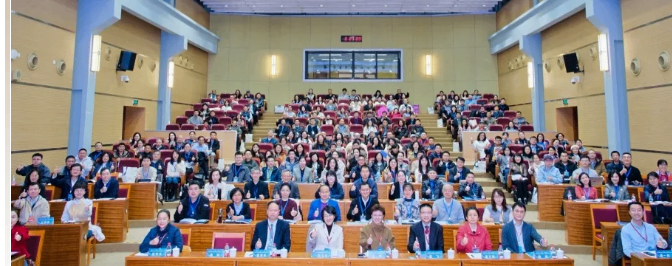
EN2026 Seminar on "AI Empowering MBA Curriculum Teaching" for MBA education institutions, hosted by the Secretariat of the National Postgraduate Education Steering Committee for Business Administration and organized by the College of Business of Shanghai University of Finance and Economics (COB SUFE), was held at the Lecture Hall of the Entrepreneurship Center of Shanghai University of Finance and Economics (SUFE). The seminar gathered numerous experts, scholars, university leaders and frontline teachers in the field of MBA education across the country to jointly explore the transformation and innovation path of MBA education in the era of artificial intelligence.
01 Opening: Embarking on a New Chapter of Digital and Intelligent Education
Professor Jin Yuying, Member of the Standing Committee of the Party Committee, Vice President of SUFE, and concurrently Dean of the College of Business of Shanghai University of Finance and Economics, delivered the opening address. Vice President Jin extended a warm welcome to the distinguished guests coming from afar and expressed gratitude for the trust and support from the National Postgraduate Education Steering Committee for Business Administration. She noted that the rapid advancement of generative artificial intelligence is profoundly reshaping all walks of life. As a pivotal platform for cultivating high-level management talents, MBA education now faces unprecedented opportunities and challenges. She emphasized that AI-empowered education represents a systemic transformation of concepts, models and evaluation systems, and expressed the expectation of building consensus through this seminar to jointly advance the high-quality development of China's MBA education.
Subsequently, Ms. Wang Ping, Director of the Office of the Secretariat of the National Postgraduate Education Steering Committee for Business Administration, delivered a speech. Director Wang Ping highlighted the profound significance of holding this seminar against the backdrop of the "AI +" initiative, which responds to the national strategy for educational digitalization and explores the connotative development path of MBA education. She encouraged all MBA education institutions to leverage AI to enhance teaching and drive reforms, and build distinctive and high-level MBA education brands.
The seminar was hosted by Sun Qi, Associate Dean of the College of Business of Shanghai University of Finance and Economics (COB SUFE).
02 Keynote Report: Insight into the Future and Reshape Core Competencies
Professor Xu Fei, Member of the National Postgraduate Education Steering Committee for Business Administration, Senior Professor of the Department of Strategy, Innovation and Entrepreneurship of the College of Business of Shanghai University of Finance and Economics, and Executive Vice President of Fuyao University of Science and Technology, delivered an insightful keynote speech entitled Meta-knowledge, Core Competencies and New Teaching Models in the AI Era. With a broad vision and profound insights, Professor Xu Fei analyzed the sweeping wave of artificial intelligence and its fundamental impacts on society, the economy and education.
Diverse Perspectives: Jointly Exploring Innovation Throughout the Entire Teaching Process
In the subsequent themed report session, several renowned experts and scholars shared their practices and reflections on AI-empowered MBA teaching from various dimensions.
Professor Hu Haibo, Dean of the School of Business Administration of Jiangxi University of Finance and Economics, delivered a report entitled Transformation and Restructuring: Full-Process Innovation in Case-Based Teaching Empowered by AI. He directly addressed the pain point that in-depth discussions are hard to realize in traditional case teaching, and demonstrated how AI can be integrated throughout the entire process of case selection, development, classroom design and the reshaping of teachers' and students' roles.
Professor Liang Qiazhuan from the School of Management of Xi'an Jiaotong University, Professor Xiang Rong, Executive Director of the MBA Education Center of Zhejiang Gongshang University, Professor Dong Jing, Dean of the School of International Cultural Exchange of Shanghai University of Finance and Economics, Associate Professor Yu Guangsheng from the School of Management of Fudan University, Associate Professor Wang Xi, Director of the Department of Business Administration of the School of Economics and Management of Xidian University, and Associate Professor Huang Haiyu from the School of Management of Xiamen University, respectively combined their teaching practices in courses such as leadership, practical education, strategic management, simulation courses and financial management, and shared their explorations and innovations in AI empowerment.
The seminar concluded with a simulated teaching experience session, where participating experts and professors jointly explored teaching innovation and curriculum restructuring, and gained an immersive understanding of how AI can reshape classrooms and empower real-world scenarios.
This seminar featured substantial content and diverse viewpoints, and explored the paths and methods of AI empowering MBA education in an all-round and multi-dimensional way, from macro trends to micro practices, and from theoretical restructuring to tool application. All participants reached a consensus that AI is not a substitute for education, but a powerful enabler. Future MBA education should focus more on cultivating students' meta-knowledge and core competencies to harness AI, return to value guidance and humanistic shaping, and foster high-level management talents who can adapt to the digital and intelligent era and embody both rational wisdom and humanistic warmth. It is hoped that this intellectual gathering at Shanghai University of Finance and Economics, with its in-depth exchanges and profound ideological collisions, will inspire new thinking for business education and the future development of MBA programs, and cultivate more outstanding business pillars with lofty ideals, professional capabilities and a strong sense of responsibility for China's path to modernization amid the sweeping wave of AI.

Two National Level Foreign Expert Platforms Established at College of Business of Shanghai University of Finance and Economics
The 6th SUFE Workshop on Marketing Research Successfully Held
2026 Overseas Study Tour | AI Empowering New Quality Productive Forces: College of Business MBA/EMBA UK Study Tour Concludes Successfully
2026 SUFE AI + Operations Workshop Successfully Held