 EN
ENThe 2026 SUFE "AI + Operations" Workshop was successfully held. The workshop was jointly hosted by the Department of Operations Management at the College of Business of Shanghai University of Finance and Economics and the Shanghai Frontier Science Research Base of Data Technology and Decision Science. It was co‑organized by the SUFE Interdisciplinary Laboratory for Digital‑Real Integration and Intelligent Decision Making, the Journal of Shanghai University of Finance and Economics, and the Digital Intelligence Empowering Green Innovation Team of the Institute of Chinese Modernization at Shanghai University of Finance and Economics. Operations management scholars from leading universities in China and abroad, including the National University of Singapore, the University of Toronto, the Chinese University of Hong Kong, Shenzhen, Shanghai Jiao Tong University, the Chinese University of Hong Kong, Peking University, and Shanghai University of Finance and Economics, as well as industry experts from Amazon FBA Global Science team, gathered to discuss the applications and impacts of AI technologies in operations management research, business practice, and industry transformation through keynote speeches, thematic presentations, roundtable forums, and other exchange activities.
Opening Ceremony
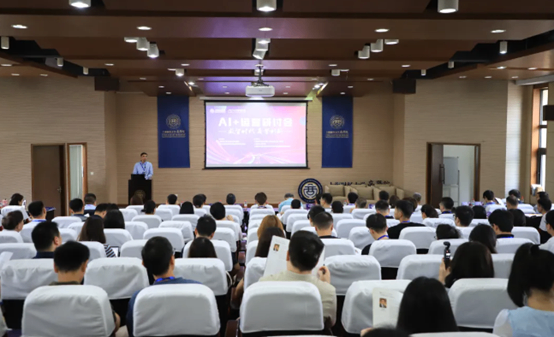
The SUFE AI + Operations Workshop officially commenced with an opening ceremony hosted by Professor Wang Wenbin, Head of the Department of Operations Management at the College of Business of Shanghai University of Finance and Economics. Professor Gao Weihe, Associate Dean of the College of Business, Shanghai University of Finance and Economics, attended the opening ceremony and delivered remarks. Associate Dean Gao first extended a sincere welcome and appreciation to the experts and participants. He noted that the workshop was established to serve as a high‑level platform for academic dialogue at the intersection of artificial intelligence and operations management. He encouraged participants to actively share their latest research findings, exchange perspectives on frontier topics, and engage in meaningful discussions. He also invited all attendees to make full use of the workshop as an opportunity to learn from one another, stimulate new ideas, foster collaboration, and advance research in the field. He concluded by wishing the workshop every success.
The workshop brought together leading scholars in operations management from China and abroad to present cutting‑edge research on the application of artificial intelligence in operations management, and included keynote presentations as well as a roundtable forum jointly attended by academic experts and corporate executives.
Keynote Presentations
Professor Zhang Junbiao from the National University of Singapore delivered a keynote speech titled "Business Analytics in the Era of AI," exploring how artificial intelligence is reshaping both business analytics education and research. Professor Zhang first discussed how AI‑driven, instantaneous knowledge generation is transforming the labor market. As AI becomes increasingly capable of producing information and analytical outputs, he argued that enduring fundamentals, such as underlying business logic and predictive perspectives, have become even more valuable. The rise of AI is expected to widen the gap between professionals who possess both deep domain expertise and AI capabilities and those who merely use AI tools. In this context, human competitive advantage increasingly lies in the ability to take meaningful action and develop specialized expertise. Consequently, future education should focus on strengthening students' disciplinary knowledge, encouraging them to explore how AI can be leveraged to address real‑world challenges, and enabling them to devote greater effort to high‑impact problems with the support of AI.
Professor Zhang also systematically explained the direction of transformation in business analytics education. Over the past decade, business schools in Asia have been oriented toward cultivating data‑driven decision‑makers in response to industry demand. However, with AI becoming widely accessible, he argued that business analytics education should shift from memorizing formulas to using AI to elevate classroom content, while emphasizing the cultivation of higher‑order competencies such as framing business problems, communicating ideas, and validating AI‑generated outputs. Finally, using the example of how geopolitics affects prices, Professor Zhang argued that preliminary judgments generated by AI may be biased, and that the value of professionals lies in using scientific models, such as game theory and optimization algorithms, to improve forecasting accuracy and ensure the reliability of results.
Professor Hu Ming from the University of Toronto delivered a keynote speech titled "When AI Meets OM." Professor Hu explored research directions at the intersection of artificial intelligence and operations management, with a focus on the theoretical framework for using large language models for inference and fine‑tuning to solve long‑tail product decision problems. In addition, Professor Hu and his team analyzed new consumer search and recommendation mechanisms under human‑AI collaboration, and proposed a consumer‑facing AI shopping agent model that optimizes purchase‑timing decisions through multi‑model integration and an LLM selection mechanism. Professor Hu noted that for scholars, AI support will improve paper quality and publication speed, but will also increase reviewing workloads and rejection rates, making higher‑quality papers more essential. In the labor market, AI narrows the gap between high‑ and low‑skilled workers in some scenarios, but it may also polarize labor demand: low‑skilled workers may be replaced, while high‑skilled workers may perform better with the help of AI.
Professor Hu then introduced the theory of inference and fine‑tuning based on large language models (LLMs), proposed solutions for inventory and pricing of long‑tail products, and constructed a new model of consumer behavior under human‑AI collaboration through a two‑stage framework. Finally, Professor Hu explained consumer‑facing AI shopping agents. The research perspective shifts from solving business operations problems to creating AI strategies for individuals, helping consumers handle everyday operations decisions by introducing an upper‑level LLM as a "selector" that determines which price‑assumption model applies based on product characteristics.
Professor Wang Zizhuo from the Chinese University of Hong Kong, Shenzhen delivered a keynote speech titled "From Optimization Automation to Innovation: Building OR‑Native AI in the LLM Era." Focused on large‑language‑model‑enabled optimization in operations research, the talk presented the latest research on AI‑enabled optimization modeling, algorithm design, and intelligent decision making. Although operations research optimization has been widely applied in logistics, manufacturing, finance, and other industries, practical applications still face challenges such as the high barrier to mathematical modeling, the shortage of specialized talent, and the difficulty of translating business requirements into formal optimization models. Professor Wang introduced his team's systematic efforts to develop OR‑native foundation models. Built upon the ORLM framework, the approach enhances LLMs' understanding of optimization variables, constraints, and code generation through domain‑specific data augmentation, while fine‑tuning further strengthens the models' capability for professional optimization modeling. The team also proposed a reasoning enhancement approach that identifies and corrects critical modeling errors through lightweight interventions, improving the model's reasoning process when solving complex optimization problems. In addition, the Agora‑Opt framework introduces multi‑agent collaboration, memory mechanisms, and debate mechanisms into optimization modeling, enabling models to cross‑validate one another, accumulate experience, and improve modeling reliability and solution quality in complex problems.
In terms of algorithmic innovation, Professor Wang highlighted the MILP‑Evolve framework, which uses large language models to automatically generate, evolve, and optimize mixed‑integer programming solution strategies. This demonstrates the potential of AI to move from "assisting modeling" to "participating in algorithm design." Drawing on the IndustryOR real‑world industrial case repository and the EM World Model teaching and research platform, Professor Wang showed the broad prospects for large models to drive intelligent decision making and innovation in operations research optimization.
Roundtable Forum
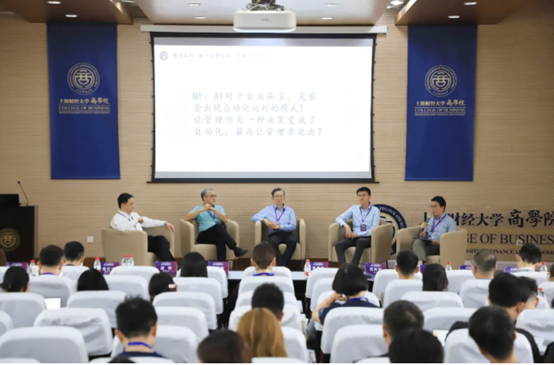
The roundtable forum was moderated by Professor Wei Hang, Dean of the Graduate School of Shanghai University of Finance and Economics. Invited participants included Shen Xinyang, Global Science Director of Amazon FBA; Professor Zhang Junbiao from the National University of Singapore; Professor Hu Ming from the University of Toronto; and Professor Wang Zizhuo from the Chinese University of Hong Kong, Shenzhen.
Recognizing that artificial intelligence is increasingly capable of identifying problems and constructing analytical models, the guests engaged in in‑depth discussion around three core themes: first, whether the continued advancement of AI is more likely to replace or empower management scholars and managers; second, how managers can continue to create distinctive and irreplaceable value in an AI‑enabled environment; and third, how management researchers should leverage advances to drive theoretical innovation and methodological progress.
Shen Xinyang argued that AI serves as both a substitute for and an enabler of managerial work. Drawing on Amazon's practical experience, he noted that many standardized and process‑driven tasks can already be automated through AI tools. However, he emphasized that today's managers should focus less on whether AI replaces individual tasks and more on how to effectively integrate AI into business operations, particularly by orchestrating multi‑agent collaboration and designing appropriate objectives. AI also creates new demands and managerial challenges. Professor Zhang Junbiao, drawing on the situation in Singapore, argued that managers and governments today should adopt a dynamic perspective when assessing AI's impact, recognizing that technological advancement will generate new occupations, reshape economic systems, and redefine workforce requirements. Accordingly, organizations and governments must keep pace with technological progress while anticipating future directions of economic and industrial transformation. Professor Hu Ming approached the issue from a historical perspective on the evolution of operations management, noting that technological development inevitably brings polarization, but that there are always measures to address substitution caused by AI technology. Regarding academic research, he argued that while AI has significantly improved research productivity, it has also contributed to the proliferation of low‑quality content. He stressed that scholars should remain focused on fundamental research questions, emphasizing the underlying logic of analytical methods and their ability to provide meaningful explanations for real‑world phenomena. Professor Wang Zizhuo interpreted the substitution effect of AI on human workers from the perspective of ongoing research and innovation projects. He argued that AI has dramatically reduced the cost and time required to initiate projects that were previously expensive and resource‑intensive. This shift, he suggested, presents managers with unprecedented opportunities to innovate, provided they are willing to adapt to and embrace AI technology. In his concluding remarks as moderator, Professor Wei Hang stated that management is inherently both a science and an art. Standardized technical processes may be replaced by AI, but the human‑centered value and artistic nature of management will become increasingly important in the AI era.
Thematic Presentations
In the afternoon session, the guest speakers shared their views around the workshop theme and introduced their latest research progress.
Professor Luo Jun from Shanghai Jiao Tong University delivered a talk titled "Measuring Supply Chain Resilience: A Perspective Inspired by Material Mechanics," focusing on supply chain resilience. Professor Luo noted that from the COVID‑19 pandemic to trade conflicts, global disruptions have made supply chain resilience (SCR) a major concern for governments around the world. However, practical frameworks for measuring resilience at the industry level remain underdeveloped, limiting efforts to transform resilience from an abstract concept into a quantifiable metric that can be systematically analyzed and optimized. Because downstream demand can propagate upstream through multiple transmission paths, often resulting in issues such as capacity underutilization, measuring resilience across supply chain networks presents significant methodological challenges.
Inspired by approaches used to measure material resilience in mechanics, Professor Luo proposed two resilience metrics specifically designed for supply chain networks. The indicators meet three requirements: first, they adopt a network perspective while remaining computationally tractable; second, they characterize resilience as an intrinsic property of the supply chain network, without relying on predefined disruption scenarios or probability spaces. Third, they capture the adaptive capacity of the network in response to changing conditions. Professor Luo further constructed a linear programming model to compute the proposed resilience metrics and demonstrated their practical value through three representative supply chain case studies. The research provides a unified analytical framework for evaluating resilience at the industry level while offering insights for macro‑level supply chain governance. At the same time, the framework helps characterize system stability and identify the "yield point" of a supply chain network.
Professor Ge Dongdong from Shanghai Jiao Tong University delivered a talk titled "New Advances in Mathematical Programming," sharing the latest progress in mathematical programming solvers, high‑performance optimization algorithms, and heterogeneous computing platforms. Professor Ge reviewed the development of leading international mathematical programming solvers, with a focus on the research and development progress of the domestically developed solver COPT. COPT has now been integrated into international optimization software ecosystems such as NEOS and GAMS, with users in more than 80 countries and regions and over 2,000 universities and research institutions worldwide, reflecting the competitiveness of China's advanced industrial software in the field of optimization computing.
Professor Ge then introduced representative achievements by his team in CPU + GPU heterogeneous computing, including the GPU first‑order linear programming algorithm cuPDLP‑C, the primal‑dual hybrid conjugate gradient method PDHCG, and the semidefinite programming solver cuLoRADS. These methods fully leverage GPU parallel computing capabilities, significantly improving computational speed and scalability for large‑scale linear programming, quadratic programming, and semidefinite programming problems. They have shown outstanding performance in tasks such as EDA design in Europe, PageRank, multilayer supply chain network design, and power market clearing and dispatch for the China Southern Power Grid. The presentation also highlighted recent advances in applying these optimization algorithms to frontier research areas such as market equilibrium analysis, quantum ordered search, and robot control. Finally, Professor Ge looked ahead to a heterogeneous computing platform of "super‑intelligence integration", emphasizing that future mathematical programming solvers will be deeply integrated with GPUs, domestic chips, quantum computing, and enterprise‑level intelligent decision systems to build a high‑precision, high‑performance, and interpretable foundation for optimization computing.
Associate Professor Zhang Renyu from the Chinese University of Hong Kong delivered a talk titled "Calibrating AI for Simulation and Inference in Operations." Professor Zhang first pointed out that large language models (LLMs) provide operations research scholars with two distinct forms of leverage: low‑cost synthetic decision makers for social simulation, and low‑cost predicted labels for large‑scale empirical analysis. However, AI outputs often exhibit systematic biases and rarely meet the statistical or theoretical standards required by rigorous operations research. He argued that calibration serves as the critical bridge between "rich but imperfect" AI‑generated information and reliable scientific evidence. His presentation illustrated this principle at two key stages of the empirical research process.
For ex ante simulation, Professor Zhang translated behavioral theory into structured LLM prompts to distinguish context formation from context navigation, calibrated prompt mixtures using limited human data, and verified alignment at both the outcome and reasoning levels through automated chain‑of‑thought analysis. The calibrated agents can reproduce the original behavioral assumptions and achieve out‑of‑sample generalization without additional human data. For ex post inference, he proposed a calibrated LLM‑enhanced double machine learning framework, Aug‑DML, which combines sparse experimental labels with abundant LLM pseudo‑labels, balancing robustness and efficiency, reducing the MAPE of causal estimates, and maintaining nominal coverage. Together, the two stages show that the most valuable role of AI in operations research is not to replace theory or experiments, but to serve as a carefully calibrated complementary tool in the empirical workflow.
Assistant Professor Han Jinhui from Peking University Guanghua School of Management delivered a talk titled "Debiasing AI Agents: From Personalized Shopping to Social Science Studies." The talk focused on the debiasing of AI agents in real‑world applications, exploring how to identify and correct systematic misalignment between AI and human objectives when AI agents become intermediaries in human decision making. Professor Han pointed out that outputs generated by AI agents may be affected by model mechanisms, objective functions, and interaction environments, and may deviate from real human behavior. Researchers therefore need to further study questions such as to what extent AI agents should be trusted, how AI‑generated data should be combined with limited human observation data, and when to stop collecting additional human samples. Professor Han introduced a sequential analysis framework that characterizes the gap between AI and human behavior and establishes a more robust, interpretable, and statistically guaranteed integration mechanism.
The second part of the presentation turned to black‑box shopping agents in personalized shopping scenarios. Shopping agents are now widely used in product search and personalized recommendation, but their internal objectives and decision‑making mechanisms remain largely opaque to users, potentially introducing systematic recommendation biases. Professor Han introduced a user‑side trainable white‑box model for training shopping agents. By learning structured prompting strategies, the model guides the interaction between users and black‑box agents so that the recommendation process moves toward higher individual utility. This provides an insightful analytical framework for understanding trustworthy use of AI agents, bias mitigation, and human‑AI collaborative decision making.
Associate Professor Ke Chenxu from the College of Business of Shanghai University of Finance and Economics delivered a talk titled "Threshold Effects in Consumer Choice: Implications for Pricing and Assortment Optimization," sharing insights on threshold effects in consumer choice and their implications for corporate pricing and assortment optimization. The talk pointed out that in real consumption scenarios, consumers are often influenced by price thresholds and utility thresholds. Price changes and product assortment adjustments affect not only consumers' relative preferences for different products, but may also change the set of products that consumers actually compare and choose from. By incorporating threshold mechanisms into consumer choice models, Professor Ke further revealed the limitations of traditional choice models in capturing consumers' limited attention, psychological thresholds, and behavioral constraints.
Professor Ke further discussed how threshold effects reshape firms' optimal pricing and assortment management decisions. He developed an assortment optimization framework that incorporates consumer heterogeneity, product profitability, and threshold constraints, analyzing how firms can select the optimal assortment from a limited portfolio to maximize expected revenue. Professor Ke also introduced optimization solution approach based a mixed‑threshold Luce model. By combining an estimation stage with a dynamic programming search stage, the approach addresses computational challenges in complex models, reveals the deeper influence of consumers' psychological thresholds on pricing decisions and product assortment strategies, and provides behaviorally grounded managerial implications for retail, e‑commerce platforms, and marketplace operators in product selection, pricing design, and assortment optimization under complex demand environments.
At the end of the workshop, Professor Wang Wenbin, Head of the Department of Operations Management at the College of Business of Shanghai University of Finance and Economics, delivered the closing remarks. He once again thanked all participating experts for their insightful presentations and valuable contributions, and looked forward to deeper academic collaboration and exchange in the future. The "AI + Operations" Workshop then came to a successful close.
The one‑day workshop focused extensively on cutting‑edge academic research and industry practices at the intersection of artificial intelligence and operations management, bringing together experts, scholars, and industry representatives from leading universities in China and abroad. Through keynote speeches, thematic presentations, and industry‑academia roundtable discussions, the workshop fully showcased the latest research progress and practical explorations in the field, building a high‑quality exchange platform for mutual empowerment between academic research and industrial application. As the host of the workshop, the College of Business of Shanghai University of Finance and Economics has always been committed to cultivating outstanding business professionals and advancing disciplinary innovation. It closely follows the developments in intelligent and digital technologies while actively exploring frontier areas such as operations management and data‑driven decision‑making. Looking ahead, the College will continue to leverage its disciplinary strengths and research platforms to deepen interdisciplinary research and industry‑academia collaborative innovation, and contribute SUFE wisdom and strength to the high‑quality development of business education and the digital transformation and upgrading of industry.

Two National Level Foreign Expert Platforms Established at College of Business of Shanghai University of Finance and Economics
The 6th SUFE Workshop on Marketing Research Successfully Held
2026 Overseas Study Tour | AI Empowering New Quality Productive Forces: College of Business MBA/EMBA UK Study Tour Concludes Successfully
2026 SUFE AI + Operations Workshop Successfully Held